

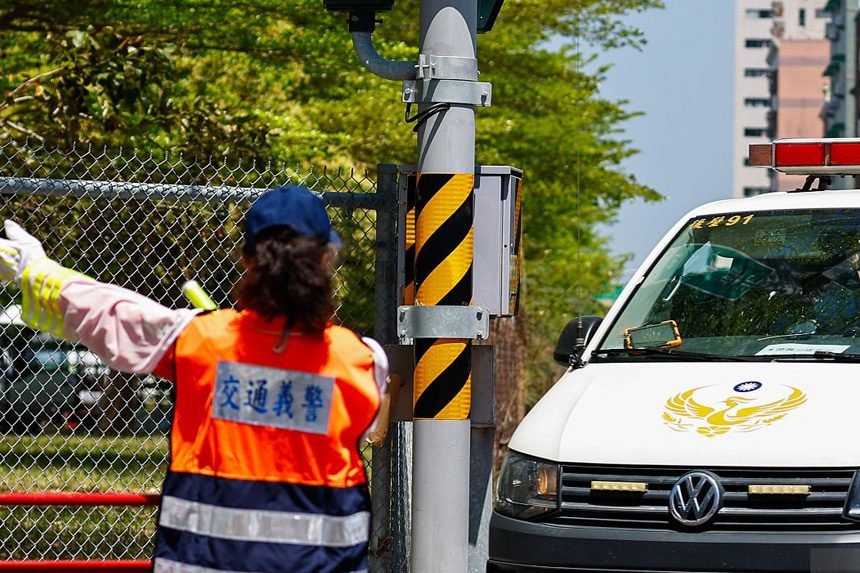
Taiwan launched its largest-ever civil defence exercise this week, drawing global attention and significantly impacting daily life in the capital city, Taipei. The comprehensive operation aimed to prepare civilians for emergency scenarios while also showcasing the island’s increasing focus on urban defence readiness. Air raid sirens rang across the city, causing traffic to halt and shops to shut down. This dramatic shift in the rhythm of the city underscored the serious intent behind the drill.
The need for such preparation has become increasingly urgent as tensions with China continue to escalate. China has repeatedly claimed sovereignty over Taiwan and has not ruled out using military force to enforce its claim. In response, the Taiwanese government is working to ensure that both the armed forces and the general public are ready for any potential threats. By carrying out a large-scale drill that combines military exercises with civilian evacuation and disaster response simulations, Taiwan is aiming to build societal resilience and preparedness without escalating tensions.
How Was the Taiwan Civil Defence Exercise Structured?
This year’s Taiwan civil defence exercise was integrated with the long-standing Han Kuang military drills. This integration marked a strategic shift from previous years when civil defence and military operations were carried out separately. Instead of limiting defence drills to military personnel, this year’s approach focused on creating a unified effort that involved emergency responders, volunteers, and everyday citizens.
In Taipei and other major cities, emergency personnel rehearsed evacuation procedures at schools, subway stations, and crowded temples. These drills simulated missile strikes and bombings in public areas, allowing first responders to practice pulling victims from rubble, treating injuries on the spot, and distributing emergency supplies to affected areas. Authorities also tested communications and coordination between agencies to improve speed and accuracy in disaster response.
Simultaneously, military units conducted exercises in densely populated areas. Troops practiced refueling and rearming Black Hawk and Apache helicopters in a riverside park. Other units took part in urban warfare simulations in exhibition centers and city streets, while some transformed a local high school into a tank repair station. These realistic settings helped create an authentic training environment for defending key infrastructure during a hypothetical attack. Read another article, Taiwan Firm Denies Lebanon Blast Link
What Was the Message From Taiwan’s Leadership?
President William Lai attended the exercise along with top government and military officials, as well as Raymond Greene, head of the American Institute in Taiwan. In a speech delivered at the end of the day’s activities, Lai stressed the importance of preparing for conflict as a deterrent against war. He stated clearly that Taiwan is not seeking confrontation. Instead, the purpose of the Taiwan civil defence exercise is to ensure that the island can maintain peace by being prepared for any threat that might arise.
Lai emphasized the resilience and unity of Taiwanese society as crucial components of the island’s defence strategy. By involving everyday citizens in these drills, the government is fostering a culture of readiness. His message was reinforced by the structured nature of the drills, which combined military precision with public engagement.
He also addressed concerns about escalating tensions, clarifying that preparation does not equal provocation. “We hope by preparing for war, we can avoid war,” Lai said. “With preparation, we have strength.”
How Are Taiwanese Citizens Reacting?
Public reactions to the Taiwan civil defence exercise have been varied. Many citizens expressed support for the initiative, noting that readiness is essential given the region’s political climate. Ben, a 29-year-old finance professional in Taipei, said he welcomed the drills. “I think it’s necessary,” he explained. “Every country needs to know how to respond in an emergency. Even if the threat isn’t immediate, we have to stay prepared.”
Others were less optimistic. Mr. Xue, a 48-year-old office worker, said he doubts Taiwan can effectively resist a full-scale attack from China. “There’s just too big a difference in military strength,” he said. “Practicing is fine, but I don’t think it will make a real difference if an invasion actually happens.”
Recent polling supports this mix of opinion. A survey conducted by the Institute for National Defence and Security Research (INDSR) last October found that more than 60% of Taiwanese do not believe China will invade within the next five years. However, the same poll revealed that only half of the respondents have confidence in Taiwan’s military to defend the island if needed. These findings highlight the delicate balance the government must maintain—preparing the population without causing widespread fear or panic.
What Was the Military’s Role in the Han Kuang Drills?
While the civil component of the Taiwan civil defence exercise received much attention, the military side of the operation was equally critical. More than 22,000 troops participated in Han Kuang this year—an increase of over 50% from the previous year. These exercises tested responses to land, sea, and air threats and featured both imported and domestically developed military technology.
U.S.-supplied HIMARS missile systems and locally manufactured rocket launchers were deployed as part of strategic simulations. Troops practiced counterattacks, rapid deployment, and defense of high-value infrastructure such as bridges, ports, and communication hubs. The drills also addressed modern threats like greyzone warfare, disinformation, and cyber attacks, highlighting Taiwan’s efforts to defend both its physical and digital borders.
Military and civil teams coordinated closely throughout the week, which significantly boosted the realism and effectiveness of the exercises. This collaborative approach aims to strengthen coordination during actual emergencies, when swift and seamless communication between defence forces and local agencies will be critical.
What Does This Mean for Taiwan’s Future Security?
The Taiwan civil defence exercise represents a significant shift in how the island is approaching national defence. It is no longer enough to rely solely on military power. By including civilians in disaster preparedness and integrating them into larger strategic operations, Taiwan is laying the groundwork for a whole-of-society approach to defence.
This proactive planning sends a strong message: Taiwan will not wait for a crisis to act. Instead, the island is building a culture of readiness—one that prioritizes unity, responsiveness, and resilience in the face of evolving threats. While there is no certainty about the future, Taiwan is making it clear that it is ready to protect its democracy and its people.