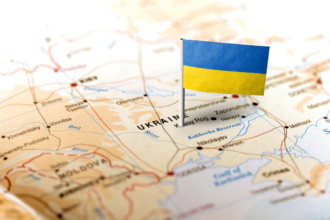


Russia has forcefully rejected plans to send Western troops to Ukraine as part of future security guarantees for Ukraine. The Kremlin says that having foreign troops, especially from NATO countries, in the area would make things less stable and make tensions worse. The denial comes at a time when diplomatic talks are starting up again about how to end the crisis, which has been ongoing for more than three years.
The “Coalition of the Willing” is the name of a recent international summit that brought together more than 30 countries. The talks were mostly about coming up with a possible security plan for Ukraine after a truce. But the authorities of Russia fiercely opposed any plans that would put Western troops on Ukrainian soil, calling it a violation of sovereignty that could not be accepted.
Why does Moscow not want Western troops in Ukraine?
The Kremlin says that foreign troops in Ukraine, especially those from the US or EU, are a direct threat to Russian national interests. Dmitry Peskov, a spokesman for the Kremlin, warned that any plan to protect Ukraine by having Western troops there was “absolutely unacceptable.” Russia has said it should be included as a guarantor, but Kyiv and its Western partners are strongly against this.
This move by Moscow comes after Western leaders recently suggested that troops may be deployed in many domains—land, sea, or air—after a truce. But Russia has replied by sending more troops into Ukraine, which makes it even less likely that the situation will calm down soon. Here is the link to our article on Taliban Weapons War.
What Are the Allies in the West Planning?
At the coalition summit, Western countries promised to work together to protect Ukraine once the combat stops. Some leaders, including those from France and the UK, strongly backed long-term commitments. But the US and other NATO countries have not promised to send ground troops. Instead, they have said they would prefer air support and defense systems.
Keir Starmer, the Prime Minister of the UK, said that the alliance’s promise was “unbreakable” and called for everyone to work together to stop more Russian aggression. European diplomats, on the other hand, warn that openly sending troops may make Russia’s anti-Western story stronger.
What is Ukraine’s response to the debate?
Ukrainian President Volodymyr Zelensky has called for “maximum protection” of his country’s airspace and independence. Kyiv keeps asking for strong security assurances for Ukraine, including help from the US and European partners. It won’t accept any plan that involves Russia as a guarantor.
Zelensky’s government is still having high-level diplomatic talks. Recent talks in Paris with US diplomats were mostly about military strategy and plans for what to do after the ceasefire. Ukraine says that a truce must come before any real peace talks, even if violence is still going on. Here is the link to our article on Prison Security Boost.
What do we need to do next for the peace talks?
There are more and more appeals for a truce, but no real agreement has been reached. Chancellor Friedrich Merz of Germany said again that the first step toward getting long-term security guarantees for Ukraine is to stop fighting. Russia, on the other hand, says that its military effort will go on until there is a full peace agreement.
Some people have suggested utilizing past ceasefires, like the Korean armistice, as a model. Some diplomats say that a strong international military presence, like the US’s long-term commitment in South Korea, may stop future conflicts from getting worse.
Could a meeting between Putin and Zelensky still happen?
It doesn’t look like there will be a summit between Russian President Vladimir Putin and Ukraine’s Zelensky. Recently, Putin asked Zelensky to come to Moscow for negotiations, but Kyiv said it was a joke and a trick. This has led Western officials to believe that Russia isn’t really interested in making peace through direct talks.
At the same time, NATO Secretary-General Mark Rutte said that Ukraine has the right to get help from any allied country. He said, “Russia can’t stop another country from making security decisions.”
Final Thoughts
Ukraine’s security guarantees have become the central focus of international diplomacy, even as no clear path to peace has emerged. While Western powers debate the extent of their involvement, Russia’s firm opposition to foreign troop deployments remains a significant obstacle. Without a unified and accepted framework, achieving lasting peace appears increasingly difficult.