

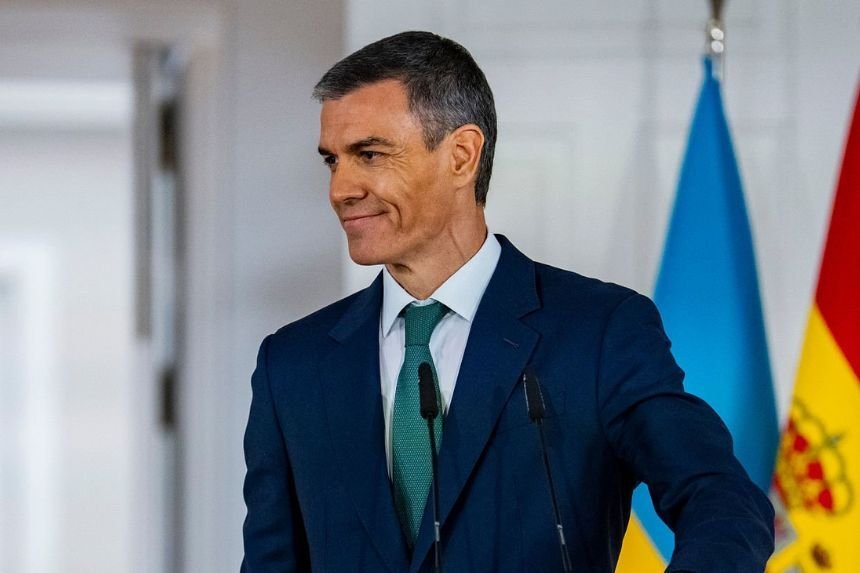
Spain is currently facing one of the most intense political crises of recent times, with Pedro Sánchez at the center of a growing storm. Tens of thousands of Spaniards have taken to the streets of Madrid, demanding accountability from the socialist leader. Many protests have occurred around symbolic locations like Templo de Debod, where demonstrators carried placards reading “Sánchez Dimisión”, “Elecciones Ya”, and “Enough is enough!”.
- Demographics and Public Participation
- Pedro Sánchez and Judicial Scandals Affecting Public Confidence
- Pedro Sánchez and the Opposition’s Call for Early Elections
- Pedro Sánchez and Far-Right Mobilization Around PSOE Headquarters
- Pedro Sánchez and Economic Pressures Driving Public Frustration
- Pedro Sánchez and International Parallels: Learning from the UK
- Pedro Sánchez Navigates a High-Stakes Political Landscape
The Partido Popular (PP) organized the largest demonstrations, while far-right factions linked to Vox and civic groups also mobilized citizens, sometimes merging with PP rallies or holding separate marches near PSOE headquarters. These gatherings reflect widespread dissatisfaction with Sánchez’s government and growing calls for early elections.
Demographics and Public Participation
The protests have attracted a wide cross-section of society. Families, students, young professionals, and retirees all participated. Many voiced frustration not only with political corruption but also with economic struggles, housing shortages, and the perception that Spain’s leader prioritizes political survival over governance.
Public sentiment has become increasingly vocal, fueled by social media campaigns, influencer posts, and viral videos circulating calls for accountability. This growing civic pressure has created a tense environment for the government and the prime minister personally.
Ancient Brain Turned to Glass: A Rare Volcanic Phenomenon
Pedro Sánchez and Judicial Scandals Affecting Public Confidence
The Koldo Case: Alleged Corruption
A major controversy surrounding Pedro Sánchez’s administration is the Koldo Case, which involves former transport minister José Luis Ábalos and his adviser Koldo García. Both were remanded in custody for alleged irregular commissions tied to emergency pandemic contracts. Investigations include accusations of bribery, embezzlement, and influence peddling.
The case has widened beyond masks to examine potential manipulation of public contracts across multiple autonomous regions, including the Canary Islands and Balearic Islands. Opposition parties argue that these cases indicate systemic corruption under Sánchez’s leadership rather than isolated incidents.
Ábalos Detention and Political Fallout
José Luis Ábalos became the first sitting MP to be detained in recent Spanish history, marking a significant political milestone. The PSOE leadership expelled him from the party, although he maintains a parliamentary seat as a non-attached member. This event has intensified public scrutiny and fueled opposition claims that the government is incapable of self-regulation.
Attorney General Conviction
The conviction of Attorney General Álvaro García Ortiz for leaking confidential tax information about Isabel Díaz Ayuso’s partner has further intensified criticism. Analysts note that these legal controversies contribute to public distrust in Spain’s institutions and highlight the political risks facing Pedro Sánchez.
Investigations Involving Sánchez’s Family
The prime minister’s family has also come under judicial scrutiny. His wife, Begoña Gómez, faces allegations of influence peddling, embezzlement, and misuse of academic or business connections. His brother, David Sánchez, is involved in legal proceedings for administrative mismanagement. While no convictions exist, these cases reinforce opposition narratives about corruption and institutional decay under the socialist leader.
Pedro Sánchez and the Opposition’s Call for Early Elections
Feijóo’s Leadership and Anti-Corruption Narrative
PP leader Alberto Núñez Feijóo has been a vocal critic of the government, emphasizing Sánchez’s alleged moral and institutional failings. At large rallies, he framed controversies under the term “sanchismo,” describing it as a combination of political opportunism, economic manipulation, and erosion of ethical governance.
Feijóo and other opposition figures argue that only snap elections can restore public trust in Spain’s democracy, and warn that ignoring widespread dissatisfaction risks long-term institutional damage.
Russia Strikes Kyiv as Zelensky Suggests Land Swap for Peace
Support from Key PP Figures
Key figures such as Madrid mayor José Luis Martínez-Almeida and former PM Mariano Rajoy publicly support Feijóo’s narrative. Regional leader Isabel Díaz Ayuso accuses Pedro Sánchez of leading Spain toward a “totalitarian project” with tacit support from separatist parties. Her rhetoric has drawn comparisons to historical threats to national unity, including references to ETA, highlighting perceived risks to Spain’s cohesion.
Demands for Snap Elections
The opposition’s main demand is for immediate elections. They argue that continuing under a government perceived as corrupt undermines the legitimacy of public institutions and sets a dangerous precedent, signaling that allegations alone cannot hold leaders accountable.
Pedro Sánchez and Far-Right Mobilization Around PSOE Headquarters
Vox’s Plans to Merge Protests
Far-right groups linked to Vox aim to merge their rallies with PP-organized demonstrations and march toward PSOE headquarters on Calle Ferraz. While Vox leadership officially distances itself from some actions, youth wings and ultraconservative movements actively encourage participation.
Social Media and Youth Mobilization
Influencers like Cake Minuesa, Cristina Seguí, and Jesús Santorio circulate calls for direct action, framing the government as a “criminal organization.” Videos and posts on social media help mobilize thousands of citizens and amplify public pressure.
Authorities’ Preparedness and Security Concerns
Madrid police anticipate heightened tensions due to potential clashes. Prior events at Ferraz in November 2023 escalated into arrests and confrontations. Authorities have warned that unapproved demonstrations may be deemed unlawful, raising the stakes for public order.
Pedro Sánchez and Economic Pressures Driving Public Frustration
Inflation and Housing Costs
Economic challenges, including rising inflation and housing shortages, have added fuel to anti-government protests. Student Daniel Noguera commented: “Prices go up constantly, and finding a place to live is becoming harder than ever.”
Economic grievances have intertwined with political dissatisfaction, making protests more persistent and vocal.
Political Mismanagement and Governance Concerns
Critics argue that alliances with separatist parties, controversial legislative initiatives, and strategic maneuvers prioritizing power retention over governance exacerbate public frustration. Citizens perceive a government more focused on survival than national welfare.
Pedro Sánchez and International Parallels: Learning from the UK
Boris Johnson’s Partygate Protests
Spain’s current crisis mirrors UK protests against Boris Johnson in 2022, where public pressure demanded the prime minister resign after political scandals. Slogans like “Johnson Out” captured civic frustration and forced political accountability.
Liz Truss and Calls for Early Elections
During Liz Truss’s brief premiership, mass demonstrations urged “General Election Now!” in response to market instability and policy mismanagement. Truss resigned after 44 days, demonstrating how public mobilization can rapidly influence leadership outcomes—a lesson for Spain’s opposition.
Pedro Sánchez Navigates a High-Stakes Political Landscape
Commitment to Full Term
Despite protests, Pedro Sánchez insists he will serve until the end of his term in 2027. He continues to reject calls for resignation and frames opposition efforts as partisan attacks rather than legitimate concerns.