
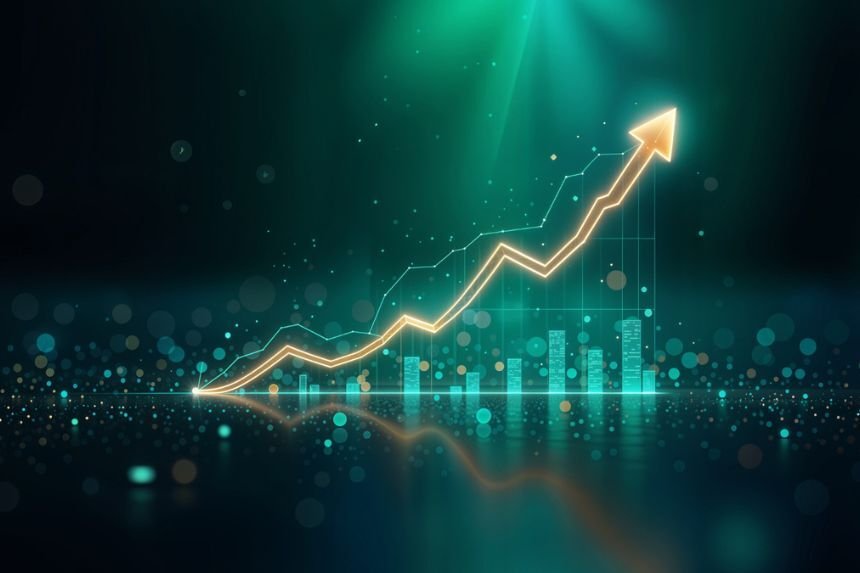
The U.S. economy demonstrated remarkable resilience in 2025, with GDP growth reaching 4.3% in the third quarter.
- Understanding the K-Shaped Economy
- Consumer Spending Powers Expansion
- Government and Private Investment Support Growth
- Labor Market Trends and the U.S. Economy
- Inflation and Its Effect on the U.S. Economy
- Trade, Exports, and the U.S. Economy
- Wealth Inequality and the K-Shaped Economy
- Technology and AI Investments in the Economy
- Fiscal and Monetary Policies
- Consumer Confidence and Perception
- Conclusion: Sustaining U.S. Economy Growth
- Frequently Asked Questions (FAQs)
Consumer spending, corporate profits, government investment, and exports all combined to drive the fastest expansion in two years.
Despite these headline gains, many Americans report feeling financially strained, revealing the uneven distribution of growth.
High-income households capture most of the benefits, while middle- and lower-income families struggle to keep pace.
This disparity explains why public perception of the American economy often differs from macroeconomic data.
Analysts are examining U.S. economy predictions for 2026, assessing whether growth will continue amid inflation pressures.
Trade policies, federal spending, and corporate investment remain critical for understanding the national economy trends this year.
The government’s approach to tariffs and fiscal stimulus continues to influence the U.S. economy news today.
Understanding the K-Shaped Economy
The K-shaped recovery illustrates how households experience growth differently, with top earners seeing gains far exceeding others.
Affluent Americans benefit from rising stock markets, higher real estate values, and increasing wages, supporting robust consumption patterns.
Middle- and lower-income households face stagnant wages and rising living costs, affecting everyday financial security.
This economic divergence explains why many question why the US economy so bad, despite positive GDP data.
The unequal recovery is also highlighted in U.S. economy news recession reports, reflecting the uneven impact across society.
The concentration of wealth and spending power in the top 10% continues to shape US economic growth 2025.
Consumer Spending Powers Expansion
Consumer activity drives roughly 70% of the domestic economy, remaining the main engine of growth in 2025.
In the third quarter, spending increased at a 3.5% annualized rate, up from 2.5% in the previous quarter.
High-Income Households Leading Spending
Affluent households fuel much of the consumption growth by purchasing luxury goods, travel, and premium services.
Their spending supports GDP growth and contributes to indicators reported in U.S. economy news today.
Middle- and lower-income households have limited discretionary spending due to rising essential costs.
Healthcare, energy, groceries, and childcare increasingly burden household budgets, limiting financial flexibility.
Challenges for Middle- and Lower-Income Americans
Many families experience the effects of a K-shaped recovery, where the wealthiest thrive while others struggle financially.
Even with small price reductions for some goods, overall inflation pressures continue to affect middle-income households.
Financial strain is exacerbated by stagnant wages, job insecurity, and growing debt obligations, including credit cards.
This explains why the public perception sometimes diverges from the positive GDP growth in the United States economy.
Texas Floods: 161 Missing After Deadly Flash Floods in Kerr County
Consumer Confidence Trends
High-income households remain confident and maintain consumption, supporting overall economic momentum.
Middle- and lower-income households adopt cautious spending habits to manage financial limitations and uncertainties.
Consumer surveys reveal this divide, clarifying why some Americans worry about a potential U.S. economy collapse.
Government and Private Investment Support Growth
Government and corporate investments continue to bolster the American economy, contributing to GDP growth and resilience.
Government Spending
Federal, state, and local expenditures increased in defense, infrastructure, and social programs, boosting the domestic economy.
Government spending offsets weaknesses in other sectors, sustaining short-term economic momentum for businesses and households.
Defense and local infrastructure projects provide steady jobs and revenue for local communities, supporting overall economic activity.
Private Business Investment
Corporate investment, particularly in AI and intellectual property, strengthens productivity and long-term economic resilience.
Investment in housing and commercial real estate remains constrained due to elevated borrowing costs and interest rates.
Corporate profits surged during Q3, mainly benefiting top earners, highlighting growing inequality in the US economic landscape.
Premium services, luxury goods, and discretionary consumption remain strong, reinforcing the K-shaped recovery.
Innovation in artificial intelligence and software also contributes significantly to business efficiency and GDP growth.
Labor Market Trends and the U.S. Economy
Employment and Job Security
Despite strong GDP numbers, job creation has slowed, and unemployment rose to 4.6%, the highest in four years.
Businesses are adopting AI and automation, reducing labor demand while maintaining productivity and profitability.
This slowdown in hiring disproportionately affects middle- and lower-income households, reinforcing the K-shaped recovery pattern.
Impact on Households
High-income earners experience rising wages and secure positions, while many others struggle with stagnant pay.
Surveys show that middle- and lower-income Americans continue to face financial insecurity, explaining why perceptions of the U.S. economy today vary widely.
Debt, rising living costs, and limited job opportunities create financial stress, despite strong macroeconomic indicators.
Many Americans feel that their personal finances are not improving, despite government reports showing GDP growth.
Inflation and Its Effect on the U.S. Economy
Inflation significantly influences household spending patterns and perceptions of economic health.
The personal consumption expenditures (PCE) index rose to 2.8% in Q3, reflecting ongoing price pressures across various sectors.
Core PCE, which excludes volatile food and energy costs, increased to 2.9%, affecting household budgets and discretionary spending.
Income Disparities and Inflation
High-income households typically outpace inflation with wage growth, allowing continued discretionary spending.
Middle- and lower-income households experience higher expenses for electricity, natural gas, food, and healthcare, reducing purchasing power.
This disparity explains why many Americans ask, “Why is the American economy so bad?”, despite positive GDP figures.
Robert F. Kennedy Jr. Sues North Carolina Election Board to Remove His Name from Ballot
Impact on Consumer Behavior
Rising inflation reduces discretionary spending among middle- and lower-income households, reinforcing the K-shaped recovery.
Wealthier households continue spending freely, sustaining GDP growth while others struggle to keep up with basic costs.
Consumer caution directly impacts short-term economic expansion and long-term confidence in U.S. economy predictions.
Trade, Exports, and the U.S. Economy
Exports and imports play a crucial role in supporting GDP and overall economic performance.
Exports surged by 7–8% in Q3, reflecting growing global demand for U.S. goods and services.
Imports declined due to tariffs and trade restrictions, contributing positively to GDP growth and U.S. economy graph indicators.
Trade Uncertainty and Business Impact
Businesses reliant on global supply chains face uncertainty from tariffs and trade policy changes, affecting hiring and investment.
This uncertainty impacts household sentiment and financial planning, influencing public perceptions of how’s the economy in the United States.
Economists continue debating whether trade policies will support long-term U.S. economy 2026 growth or create volatility.
Wealth Inequality and the K-Shaped Economy
Wealth inequality remains a central feature of the American economy, with the top 10% capturing most consumption and investment gains.
Middle- and lower-income households continue to face stagnant wages, higher costs, and limited financial mobility.
Policy Implications
Policymakers must address income disparities through targeted tax incentives, wage growth initiatives, and broader access to financial tools.
Without intervention, public perception of the economy may remain negative despite strong GDP growth, as highlighted in U.S. economy news recession reports.
Inclusive policies can reduce the K-shaped pattern, ensuring growth benefits all households, not just the wealthiest.
Technology and AI Investments in the Economy
Corporate investment in AI and intellectual property has emerged as a key driver of U.S. economy growth 2025.
AI spending increased 5.4% in Q3, contributing to higher productivity, innovation, and corporate profitability.
Who Benefits
Wealthy households benefit most from technology-driven growth via stock portfolios and business ownership.
Middle- and lower-income households see limited immediate gains, reinforcing economic inequality and affecting perceptions of U.S. economy today.
Technology investment continues to shape the structural dynamics of GDP and household financial security.
Fiscal and Monetary Policies
Government fiscal policy, including tax cuts, business incentives, and retirement account expansions, stimulates consumer spending.
These measures influence U.S. economy today and are central to U.S. economy 2026 projections and broader economic stability.
Monetary Policy Impact
Federal Reserve interest rate decisions affect borrowing costs, investments, and household consumption patterns.
Balancing growth with inflation control remains essential to prevent instability or fears of a U.S. economy collapse.
Policies must target broad participation to ensure that all households benefit from sustained growth.
Consumer Confidence and Perception
Despite strong GDP growth, consumer confidence remains mixed, highlighting a gap between data and household experiences.
High-income households remain optimistic, while middle- and lower-income Americans face financial pressure from rising costs.
Concerns about affordability, job security, and wage stagnation contribute to questions like why the US economy is so bad.
Understanding the Disparity
Policymakers must address wage growth, financial access, and cost-of-living pressures to make economic gains more inclusive.
This approach ensures the U.S. economy today reflects improvements for all households rather than only top earners.
Conclusion: Sustaining U.S. Economy Growth
The U.S. economy continues to expand through consumer spending, government investment, trade, and technological innovation.
However, persistent income inequality, inflation, and uneven job growth remain challenges for broad-based prosperity.
Policymakers must focus on wage gains, financial security, and access to investments to sustain inclusive economic growth.
Addressing structural disparities ensures that U.S. economy 2025 growth benefits all Americans, reducing risks of instability.
Recent U.S. economy news today highlights both resilience and fragility, showing the need for balanced policies.
Managing growth, equity, and stability will determine the trajectory of U.S. economy 2026 and future household prosperity.
Frequently Asked Questions (FAQs)
- How is the economy in the US right now?
The U.S. economy is growing steadily, with strong consumer spending and GDP expansion, though inequality and inflation remain concerns. - Are we headed for a recession in 2025?
Moderate growth may continue, but risks from inflation, slower hiring, and global uncertainty could slow economic momentum. - Who has the #1 economy in the world?
The United States has the #1 economy globally, measured by nominal GDP, driven by consumption, innovation, and market strength.
4. Why is the US economy falling?
While GDP is strong, some households face rising costs, stagnant wages, and inequality, creating the perception of economic weakness.