


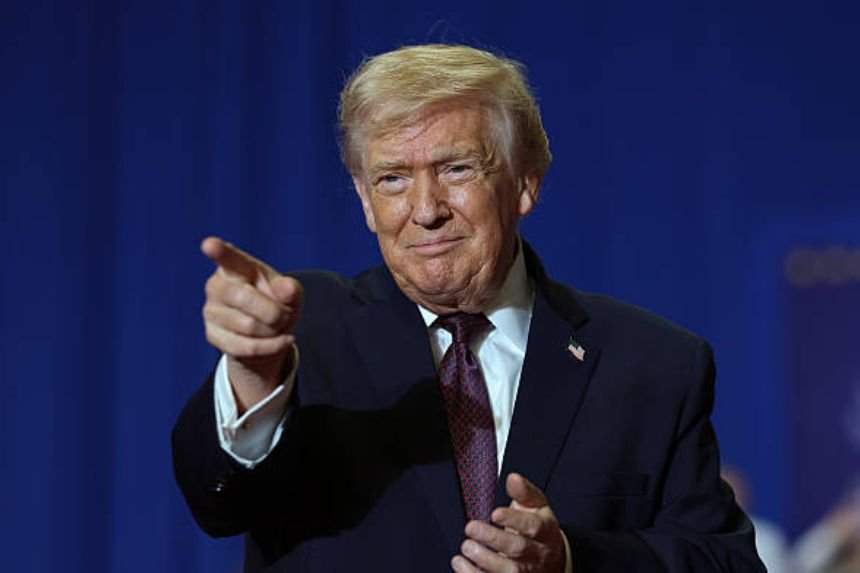
The recent Trump veto authority was used by President Donald Trump to reject several important bills impacting individuals in the United States.
- Trump Veto on Colorado Water Infrastructure
- Trump veto and Bipartisanship
- Trump Vetoed Florida Tribal Legislation
- Trump Veto and Border Legislation
- Trump Veto 2025 and the Presidential Authority
- Legal Authority and Constitutional Power
- Effects of the Trump veto and the Community
- Trump Veto: Fiscal and Policy Consequences
- Conclusion: Trump Veto Legacy
These executive vetoes underscore the presidential power of legislation, tribal matters, and government projects such as infrastructural development in the country.
In Colorado, the Arkansas Valley Conduit Act and in Florida, the Miccosukee tribal legislation had both been blocked, even with a bipartisan vote.
Lawmakers have been looking into the possibility of a Trump veto override that would need two-thirds in both the House and Senate.
Those vetoes indicate that executive interventions have a direct impact on the infrastructure, safety of the environment, and services to the community in various states.
Trump Veto on Colorado Water Infrastructure
The Arkansas Valley Conduit Act History
Planning of the Arkansas Valley Conduit has been going on since the 1960s to provide clean water to the communities in southeastern Colorado.
The pipeline will cover 130 miles, with the base located in Pueblo Reservoir to Bent, Kiowa, Crowley, Otero, Prowers, and Pueblo counties.
The groundwater in the area is highly salted and at times radioactive, which makes the project vital to the people.
The Finish the Arkansas Valley Conduit Act permitted the communities to pay federal contributions in 100 years without interest.
The bill was passed in the House unanimously and had great Senate support, which is a result of a decades-long bipartisan effort.
Presidential rejection Community Impact
The executive veto is preventing tens of thousands of rural citizens of southeastern Colorado access to clean drinking water.
Municipalities can be more expensive and have longer project timeframes, posing risks to the well-being of the citizens and the financial stability of the community.
Rep. Lauren Boebert condemned the ruling, saying it was politically driven and cited past disputes with the president over Epstein-related paperwork.
The move, called a revenge tour by the senators Michael Bennet and John Hickenlooper against the state of Colorado, highlights the plight of rural communities.
The governor, Jared Polis, cautioned that the postponement of infrastructure poses a threat to the population and derails the long-term plans on water management.
Trump veto and Bipartisanship
Cross-Party Approval
The Arkansas Valley Conduit Act had many supporters across the board, which showed that the Republicans and Democrats in Colorado collaborated.
There was a high level of legislative support with the bill being passed by voice vote in the House and unanimous consent in the Senate.
The project would provide secure municipal water, meet the industrial needs, and generate job opportunities for the locals.
The fiscal efficiency of the project is pointed out, as the Congressional Budget Office estimated the federal involvement would cost less than half a million dollars.
The Bureau of Reclamation emphasized the significance of the conduit in a steady supply of water and sustainability within southeastern Colorado.
Padilla Handcuffed at LA Immigration Briefing
Trump’s veto may be overridden
Congress can make an effort for a Trump veto, which can only be successful with two-thirds in both houses.
This threshold can be met, and it is not an easy task because both sides of the political spectrum are in support of it, and unanimous Congressional votes have been recorded in the past.
Legislators are considering ways to get an override, which would allow access to water and project completion even though opposed by the president.
This is the process that demonstrates the relationship between the legislative and executive powers in the formulation of federal policy.
There is still lobbying by local authorities and players to ensure that Congress supports the fight to curb delays occasioned by the presidential move.
Trump Vetoed Florida Tribal Legislation
Miccosukee Reservations Area Amendments Act
The president also vetoed the Miccosukee Reserved Area Amendments Act, which was supposed to increase the tribal lands in Florida in the Everglades.
The act also encompassed flood protection acts and environmental protection at the Osceola Camp, where the Miccosukee Tribe resides.
According to Trump, the tribe had no federal permission to inhabit the territory and asserted that the bill served the interests of the anti-immigration policy.
The Florida legislators, such as Rep. Carlos Gimenez, expressed their great opposition to the presidential rejection with an emphasis on tribal sovereignty and environmental preservation.
The Miccosukee Tribe expressed concerns over surrounding federal initiatives that endangered the local ecosystems, such as disputed detention centers.
Tribal and Environmental Protection Consequences
The tribe does not enjoy federal funding for housing and environmental protection programs without the approval of the legislation, and this poses a threat to the residents.
There is a possibility of environmental protection being stalled in Osceola Camp, which would expose vulnerable ecosystems in the Everglades.
The veto brings out the conflict between tribal sovereignty and the executive power, which influences local governance and the conservation process.
Representatives and tribal chiefs are considering a possible Trump veto overturn to save the rights of the indigenous and the resources of the environment.
Community and environmental activists are pointing to the federal government to intervene to stop further stalling in the protection of the area.
Trump Veto and Border Legislation
Context of Immigration and Security
Trump had vetoed bills on border security previously, and that indicated the extent of presidential control over national policy.
Such vetoes aTrump’smp veto of the order bill includes funding of immigration activities, law enforcement, and security facilities.
Leaders of Congress are weighing their Congressional veto override so that there would be continuity in operations at the facilities on the border.
The executive veto demonstrates the effect of the presidential priorities on the federal resource allocation in a variety of policy areas at the same time.
The rejection of congressional bills about border control highlights the confluence between congressional will and presidential policy-making when it comes to the national approach to security.
Implications for Defense and Labor Policies
Other vetoes, including the Trump veto defense bill and the Trump veto PRO Act, demonstrate that the executive can wield influence on military and labor bills.
These presidential action elements impact funds being allocated to defense, union rights, and labor protection and bring out the executive power in determining policy.
The Congress can consider an override of Trump’s veto in case of a legislative consensus, though, to implement that, politics and partisanship make it difficult.
The presidential veto proves the constitutional equilibrium of the executive and legislative powers on the federal programs.
The impacted communities still pressure the federal government to support them to avoid breakdowns in the defense, labor, and infrastructure projects.
Trump Veto 2025 and the Presidential Authority
Number of Vetoes This Year
By 2025, the question of the number of bills Trump vetoed 2025 will be important to comprehend the role of the president in the early years of the term.
According to the first reports, the Arkansas Valley Conduit and Miccosukee tribal bills are the first big vetoes of the year.
Trump has been using the power of veto selectively, as reflected in historical trends, in which he focuses more on bills that have either fiscal, political, or policy issues.
Following vetoes assists the community, policymakers, and law experts in foreseeing lag times and planning for a legislative reaction.
These vetoes in office show a larger tendency to utilize executive powers in the formulation of the politics of public policy and federal expenditure.
Understanding the Impact of Canada-US Relations on Trade and Diplomacy
Legal Authority and Constitutional Power
The Constitution answers the question of whether Trump can veto a bill, as it provides the authority to veto to the President by Congress to the presidents.
The Congress can override a Trump veto, which would take a two-thirds majority in both houses to pass successfully.
The veto power means that the president has the power to manipulate funding, infrastructure, tribal rights, and national policy outcomes.
The knowledge about the legal framework assists the lawmakers to manoeuvre their way through political negotiation and guarantee that the interests of the community are met.
The discerning application of the vetoes by Trump shows how executive discretion can have practical effects on legislation and government initiatives.
Effects of the Trump veto and the Community
Rural Colorado Communities
The delay of the Arkansas Valley Conduit by presidential rejection poses a danger to the water access and economic stability of people, as well as their health.
The households, farming, and industrial activities largely depend on safe drinking water; hence, the timely completion is a priority for the local communities.
The relations between Trump and Colorado politicians cause additional political tensions that complicate the implementation of infrastructure and federal support of the projects.
The leaders of communities still pressure Congress to veto Trump to undertake essential projects relating to water.
Delays in infrastructure financing would have long-term effects on rural population services and the local development projects.
Tribal and Environmental Implications
The Florida veto influences tribal sovereignty and environmental protection actions, postponing the necessary flood prevention projects.
The Miccosukee Tribe is helpless to environmental dangers, with no federal approval to safeguard its own needs in terms of housing.
Slowness of the laws means a greater environmental presence in the Everglades and the sensitive ecosystems around them.
Lawmakers emphasize that federal assistance is extremely important in a timely manner to safeguard indigenous people and preserve the ecological balance.
The advocates are still seeking a Trump veto override to protect tribal rights and environmental resources effectively.
Trump Veto: Fiscal and Policy Consequences
Infrastructure and Governmental Expenditure
The presidential veto highlights the power of the executive in determining the funding of infrastructure, fiscal interests, and expenditure decisions.
The Arkansas Valley Conduit is one such project where delays underscore the aspects of financial sanity and community interests.
Critics believe the veto can hinder much needed services and economic development within impacted areas and particularly in rural areas.
Veto process is a balancing mechanism of the executive discretion against the legislative intent in federal initiatives, and it is a constitutional mechanism.
Stakeholders promote approaches of collaboration to make important projects go on even in situations where a president rejects them.
Political Ramifications
Vetoes also affect the politics between the president and the legislators as well as the local communities.
The case of Colorado and Florida demonstrate how the executive power impacts the bipartisan cooperation and views of people.
The legislative approaches, such as Trump veto override, need to use coalition-building, compromise, and negotiation to work.
Presidential vetoes determine the effects of policies on the citizens and determine future agenda in various areas of policies.
Vetoes are usually politically motivated, which can have a long-term governance impact, the level of trust in the community, and the timeframe of the federal projects.
Conclusion: Trump Veto Legacy
The Trump veto remains a factor in the U.S. policy, infrastructures, tribal sovereignty, and state spending choices in various states.
These activities involve the Colorado water projects and Florida tribal lands, which demonstrate the extensive powers of the president to act in the form of legislation.
The congress still has the authority to undertake the Trump veto override, although it takes tactical planning and cross-party alliance to be successful.
The vetoes highlight a balance on the executive power and powers of the legislature to influence national interests.
According to early 2025 vetoes, presidential influence will remain in the way of infrastructure, tribal rights, and the outcomes of public policies across the country.
FAQs About Trump Veto
Q1: What is a Trump veto?
A Trump veto is the president’s constitutional power to reject a bill passed by Congress, preventing it from becoming law unless overridden.
Q2: Can Congress override a Trump veto?
Yes, Congress can attempt a Trump veto override, but it requires a two-thirds majority in both the House and Senate.
Q3: Which bills did Trump veto in 2025?
In 2025, Trump vetoed the Finish the Arkansas Valley Conduit Act in Colorado and the Miccosukee Reserved Area Amendments Act in Florida.
Q4: What is the impact of the Trump veto on communities?
Trump vetoes can delay critical infrastructure, public services, tribal protections, and environmental projects, affecting health and economic stability.
Q5: How does a Trump veto affect tribal legislation?
A presidential rejection can delay federal support for tribal lands, flood protection, and environmental safeguards, impacting community autonomy.