

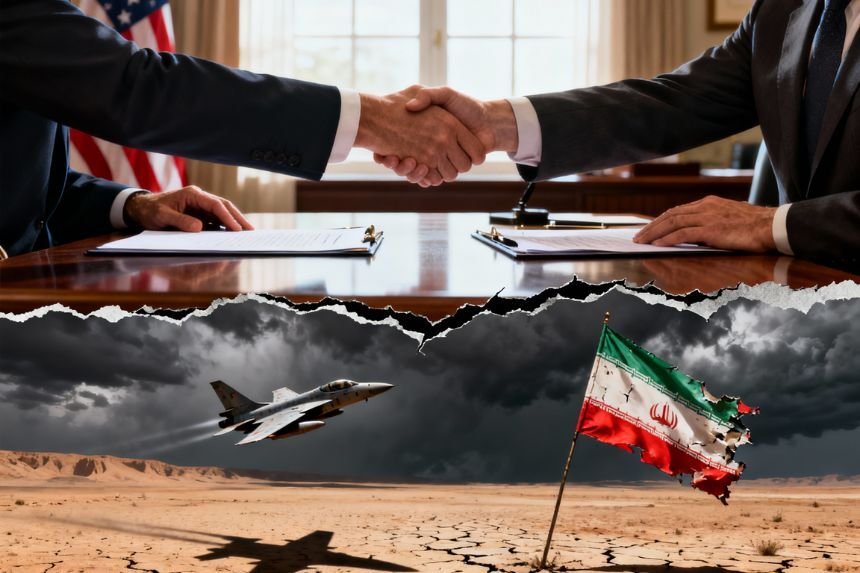
Tehran’s Supreme Leader, Ayatollah Ali Khamenei, delivered a powerful warning to the United States, stating that any American military action would provoke a “regional war.” Speaking during ceremonies marking the return of Ayatollah Ruhollah Khomeini from exile in 1979, Khamenei framed his warning within the larger historical narrative of Iranian sovereignty.
- Framing Domestic Unrest
- Historical Context and Ceremonial Significance
- U.S. Strategic Response
- Domestic Unrest: The Trigger
- International Reactions
- Mediation Efforts and Diplomatic Channels
- Tehran’s Military Posture
- Possible Escalation Scenarios
- Internal Reforms and Symbolic Measures
- Regional and Global Stakes
- Frequently Asked Questions (FAQs)
He accused Washington of plotting to seize Iran’s vast oil and natural gas resources, describing the alleged U.S. ambition as an attempt to “devour” the nation’s wealth. He sought to reassure Iranians that the presence of U.S. naval forces in nearby waters would not intimidate the country.
Framing Domestic Unrest
Khamenei also addressed recent protests, calling them “sedition” resembling a coup. He detailed incidents in which mobs attacked police stations, government offices, Revolutionary Guard bases, financial institutions, and religious sites. The Supreme Leader emphasized that these disturbances had been suppressed, drawing parallels to the 2009 Green Movement.
He underscored that Iran is not seeking conflict but promised a strong response to any attack. “We are not the instigators,” he said. “But the nation will deliver a firm blow to anyone who attacks or harasses it.”
Historical Context and Ceremonial Significance
Revolution Anniversary Festivities
The address coincided with revolution anniversary celebrations. Revolutionary Guards and army units marched along symbolic routes from Mehrabad Airport to Behesht-e Zahra cemetery, where Khomeini first addressed the public after returning from exile. These parades were both ceremonial and a demonstration of military cohesion.
Event officials projected massive pro-establishment turnout for February 11 rallies, emphasizing loyalty to the regime and opposition to foreign influence. Khamenei claimed millions participated in earlier rallies, dwarfing the numbers of demonstrators critical of the government.
Symbolic Messaging
The ceremonies served multiple purposes. They reinforced the legitimacy of the leadership, showcased military readiness, and framed domestic unrest as externally orchestrated. By combining historical symbolism with present-day military display, the Supreme Leader aimed to strengthen public resolve while warning potential adversaries.
U.S. Strategic Response
Diplomatic Signals
The United States responded with a mixture of caution and confidence. President Donald Trump downplayed Khamenei’s threats, describing them as predictable rhetoric, while emphasizing hopes for a diplomatic resolution. At the same time, he reiterated the U.S. military’s readiness to respond to aggression.
Military Posture
The USS Abraham Lincoln, leading a carrier strike group, was deployed to the Arabian Sea as a visible demonstration of power. U.S. officials emphasized that operational plans were classified, signaling strategic ambiguity to deter potential Iranian escalation.
Regional Coordination
Allied nations and regional partners, including Israel, intensified coordination with U.S. forces, preparing for potential contingencies. Ballistic missile defenses, naval maneuvers, and intelligence-sharing initiatives highlighted the seriousness of the threat environment.
Domestic Unrest: The Trigger
Origins of Protests
The unrest began in late December with demonstrations by bazaar merchants over economic grievances, including currency collapse, inflation, and fiscal mismanagement. These localized protests quickly expanded, encompassing broader demands for political freedom, improved public services, environmental reform, and opposition to systemic oppression.
Death Toll and Controversies
Official reports cite 3,117 deaths, including civilians and security personnel. Independent observers suggest that the actual toll could exceed 20,000. Connectivity restrictions have hindered accurate reporting, making verification difficult. Eyewitness accounts describe brutal crackdowns on protesters, while the government maintains that security forces acted to suppress chaos orchestrated by foreign-backed proxies.
Human Stories
Protesters and ordinary citizens have expressed fear and uncertainty. One housewife recounted that she spent her evenings watching the news, consumed with worry. These personal narratives highlight the human cost of political and economic instability.
International Reactions
Global Condemnation
Western powers, including European and North American countries, have formally designated Iran’s Revolutionary Guards as a terrorist organization due to their role in suppressing protests. These designations have deepened Tehran’s international isolation while signaling potential consequences for aggressive actions abroad.
Domestic Response and Public Mobilization
Within Iran, loyalist groups have staged pro-government rallies, often clad in green to symbolize allegiance. These demonstrations portray a united front against perceived foreign interference and reinforce the leadership’s internal authority.
Mediation Efforts and Diplomatic Channels
Regional Brokers
Turkey, Egypt, and Qatar have emerged as key mediators, engaging both Iranian authorities and U.S. representatives. High-level discussions have focused on preventing escalation, coordinating logistics, and maintaining channels for dialogue.
Iranian Diplomatic Views
Iranian officials have expressed cautious optimism about reaching a settlement. Senior diplomats have warned against miscalculations, emphasizing the potential for negotiation to achieve a fair, non-nuclear resolution. Despite high military readiness, Tehran continues to signal willingness to pursue diplomacy.
Tehran’s Military Posture
Emphasis on Irregular Warfare
The Revolutionary Guards have emphasized irregular warfare strategies to counteract U.S. technological superiority. This includes the use of drones, speedboats, and asymmetric tactics designed to disrupt naval operations in the Gulf.
Strategic Focus on the Strait of Hormuz
The Strait of Hormuz, a critical maritime passage for nearly one-fifth of global oil shipments, remains a strategic flashpoint. Iran has issued repeated warnings about potential blockades, recalling previous conflicts in which disruption of the waterway had global consequences.
Possible Escalation Scenarios
Targeted Strikes
One potential scenario involves strikes on Revolutionary Guard bases, missile depots, and nuclear facilities. While intended to weaken leadership structures, historical experience shows that such actions often lead to prolonged instability rather than immediate resolution.
Survival with Reforms
Iran might retain its current leadership while implementing reforms to address domestic grievances. This path would preserve the status quo while appeasing segments of the population, similar to governance strategies observed in other authoritarian states facing unrest.
Guards-Dominated Rule
Should civil unrest destabilize civilian governance, the Revolutionary Guards could consolidate power, effectively creating a military-led state. This scenario would prioritize national security objectives and maintain control over key strategic programs.
Regional Counterattacks
Iran could launch strikes against U.S. assets and regional allies, targeting energy infrastructure and military positions. Such actions would heighten regional insecurity and have global economic consequences.
Maritime Blockades
Iran may disrupt maritime traffic through the Strait of Hormuz, creating immediate challenges for global energy supply and international trade. Historical incidents demonstrate the widespread impact of such blockades.
U.S. Casualty Event
An accidental or deliberate attack on U.S. personnel or vessels could trigger full-scale retaliatory operations, escalating the conflict beyond the Gulf region. Past incidents provide precedent for rapid escalation following a single high-profile strike.
Societal Chaos
Prolonged conflict could lead to internal disintegration, including ethnic and regional strife, mass displacement, and humanitarian crises. The strain of war would challenge both domestic governance and international aid efforts.
Internal Reforms and Symbolic Measures
Softening Cultural Mandates
The government has attempted to project domestic legitimacy by easing certain cultural restrictions, such as allowing greater mobility for women. These measures aim to reduce public discontent while maintaining control.
Media and Narrative Control
State media continues to portray protests as foreign-instigated sabotage, reinforcing government narratives and suppressing dissenting voices. This approach highlights the balance between maintaining authority and managing public perception.
Economic Pressures
Economic hardship remains a central factor fueling unrest. Widespread corruption, punitive fiscal policies, and inadequate governance have created conditions for repeated protest cycles.
Regional and Global Stakes
Impact on Neighbors
Countries across the Middle East closely monitor Iran’s actions, anticipating potential escalation. Regional energy markets, already sensitive to geopolitical risks, could be severely affected by disruptions in the Strait of Hormuz.
Role of Mediators
Third-party nations continue to play a critical role in preventing wider conflict. By maintaining dialogue channels and facilitating negotiations, these mediators aim to avert escalation and stabilize the region.
Frequently Asked Questions (FAQs)
- Why is Iran warning about a regional war?
The Supreme Leader aims to deter U.S. aggression, signal military readiness, and reinforce domestic legitimacy by portraying the leadership as a protector of national sovereignty. - What sparked the recent unrest in Iran?
The protests began over economic grievances, including inflation, currency collapse, and poor governance, and quickly expanded to political and social demands. - How has the U.S. responded?
The United States has deployed naval forces, emphasized readiness, and maintained diplomatic channels, leaving options open for negotiation or military action. - What are the possible outcomes of rising tensions?
Scenarios include targeted strikes, survival with reforms, military-led governance, regional counterattacks, maritime disruptions, U.S. casualties, or societal collapse. - What role do regional powers play?
Countries such as Turkey, Egypt, and Qatar act as mediators, seeking to prevent escalation and maintain stability through dialogue. - How does internal unrest affect Iran’s foreign policy?
Domestic instability can push the government toward aggressive external policies to unite the population and distract from internal discontent. - Why is the Strait of Hormuz important?
It is a key chokepoint for global oil and gas shipments. Any disruption could have immediate and widespread economic consequences.
8. Could tensions escalate into full-scale war?
While restraint remains evident on both sides, miscalculations or accidents could trigger broader conflict. Diplomatic mediation remains critical.