

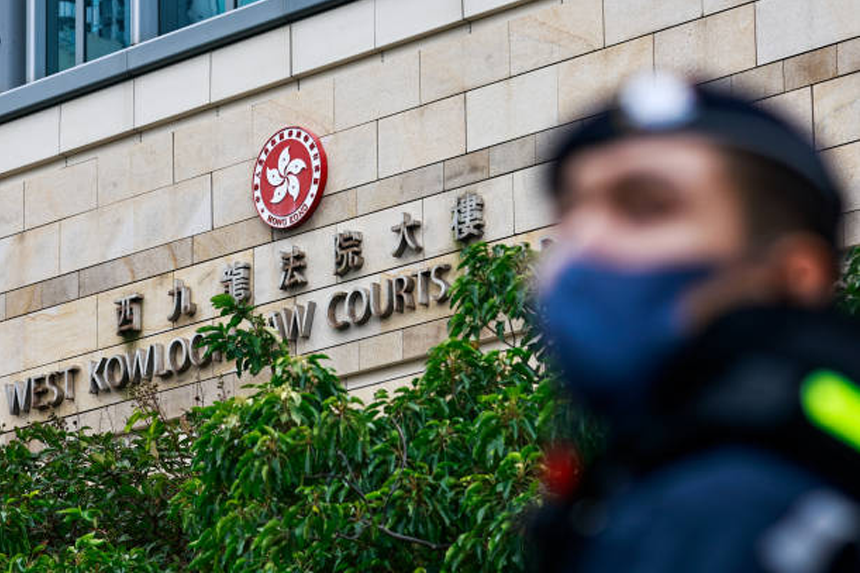
A Hong Kong court has handed down lengthy prison sentences to several prominent pro-democracy activists, marking the latest chapter in a sweeping crackdown under the controversial national security law (NSL) imposed by China. Benny Tai and Joshua Wong, members of the so-called “Hong Kong 47,” were among the 45 defendants convicted of subversion charges for their involvement in selecting opposition candidates for the 2020 local elections.
- What Was the Background of the National Security Law and the 2019 Protests?
- How Did the Trial of the Hong Kong 47 Unfold?
- What Was the Global Reaction and Criticism of the Sentences?
- How Did the Courtroom Scenes Reflect Public Sentiment?
- What Is the Political and Legal Aftermath of the Trial?
- How Has the Pro-Democracy Movement Been Affected?
- What Lies Ahead for Hong Kong's Pro-Democracy Movement?
Tai, a former law professor who spearheaded the initiative, was sentenced to 10 years in prison, the longest sentence handed down. Wong, a well-known pro-democracy figure and former student leader, received a sentence of over four years. The group’s plan to hold an unofficial primary to select opposition candidates was viewed by authorities as an attempt to undermine the pro-Beijing government, sparking widespread controversy and drawing international criticism.
What Was the Background of the National Security Law and the 2019 Protests?
The trial represents the most extensive use of the NSL, which China enacted in 2020 in response to the violent pro-democracy protests that rocked Hong Kong in 2019. Initially sparked by a proposed extradition bill, the protests evolved into a broader movement calling for democratic reforms and greater autonomy for Hong Kong. The NSL, which gives Beijing sweeping powers to punish actions that threaten national security, has been heavily criticized for curbing civil liberties and eroding Hong Kong’s once-vaunted judicial independence.
“The NSL and this trial have significantly weakened Hong Kong’s pro-democracy movement,” said a Human Rights Watch spokesperson, emphasizing how quickly Hong Kong’s freedoms have deteriorated since the law’s enactment.
How Did the Trial of the Hong Kong 47 Unfold?
Of the 47 individuals initially arrested, 45 were convicted, while two were acquitted. The defendants, including politicians, activists, and lawyers, were accused of conspiring to subvert the government by organizing the primary as part of a broader strategy to increase the opposition’s chances in the Legislative Council elections. Although the primary drew more than half a million voters, Hong Kong’s government and Beijing officials argued that the plan violated the NSL by aiming to “overthrow” the government.
Joshua Wong, who had already been in prison for his involvement in earlier protests, had his sentence reduced by a third after pleading guilty. However, the court did not grant him further reductions, citing his poor character as a factor in the decision. Before leaving the courtroom, Wong, who has long been a symbol of the pro-democracy movement, shouted, “I love Hong Kong.”
What Was the Global Reaction and Criticism of the Sentences?
The sentencing has sparked strong reactions internationally, with both the US and Australia condemning the trial as politically motivated. The US State Department described the proceedings as a clear example of “political repression.” At the same time, Australia expressed “strong objections” to using the NSL, particularly in the case of its citizen, Gordon Ng, who was also sentenced.
China’s foreign ministry, however, defended the NSL, arguing that it was necessary to protect national security and stability. “No one can engage in illegal activities in the name of democracy and attempt to escape justice,” the ministry stated, insisting that the convictions served as a warning against undermining China’s sovereignty.
How Did the Courtroom Scenes Reflect Public Sentiment?
The case has drawn intense public interest in Hong Kong, with many people queuing outside the courtroom for days to secure a seat in the public gallery. Lee Yue-shun, one of the two acquitted defendants, expressed concerns about the broader implications of the trial. “Everyone has a chance to be affected by this case,” Lee said, urging Hongkongers to question the fairness of the proceedings.
Inside the courtroom, the emotional toll on the families and supporters of the convicted activists was evident. Many in the public gallery were tearing up as the sentences were read. Some family members, such as the wife of former lawmaker Leung Kwok-hung, chanted protests against the sentencing as they left the courtroom.
What Is the Political and Legal Aftermath of the Trial?
The sentencing has raised important questions about the future of Hong Kong’s legal system. Legal experts and pro-democracy advocates have warned that the trial sets a dangerous precedent for political dissent under the NSL. “The severity of these sentences demonstrates the costs of challenging the government,” said Stephan Ortmann, an assistant professor of politics at Hong Kong Metropolitan University. “Self-censorship is now the norm, and the pro-democracy movement has been greatly weakened.”
John P. Burns, emeritus professor at the University of Hong Kong, suggested that the trial served as a means for the central government to “re-educate” Hong Kong’s population. “The message is clear: national security is the country’s top priority, and any challenges will not be tolerated,” Burns said.
How Has the Pro-Democracy Movement Been Affected?
The political landscape in Hong Kong has shifted dramatically in the wake of the NSL and the ongoing suppression of dissent. Pro-democracy activists, such as Emily Lau, the former chair of Hong Kong’s Democratic Party, have expressed the deep fear felt by citizens who now worry about the repercussions of speaking out. Lau noted that the anxiety was so pervasive that even informal gatherings, like dinner parties, have become difficult to organize.
“The fight will continue peacefully and legally,” Lau said. Despite the mounting pressure, she insisted that “the Beijing government has not won the hearts of the people.”
Sunny Cheung, an activist who participated in the 2020 primary and later fled to the US, echoed these sentiments. “The Beijing government might be happy because the opposition has been wiped out,” he said, “but at the same time, they’ve lost an entire generation. They don’t have the trust of the people.”
What Lies Ahead for Hong Kong's Pro-Democracy Movement?
The sentencing of the Hong Kong 47 has underscored the diminishing space for dissent in the city. Both inside and outside Hong Kong, pro-democracy activists face an increasingly uncertain future while Beijing tightens its grip on the territory. The case highlights the struggle for freedom in a city radically transformed by the sweeping powers of the NSL, leaving many questioning what lies ahead for Hong Kong’s once-vibrant democratic movement.