

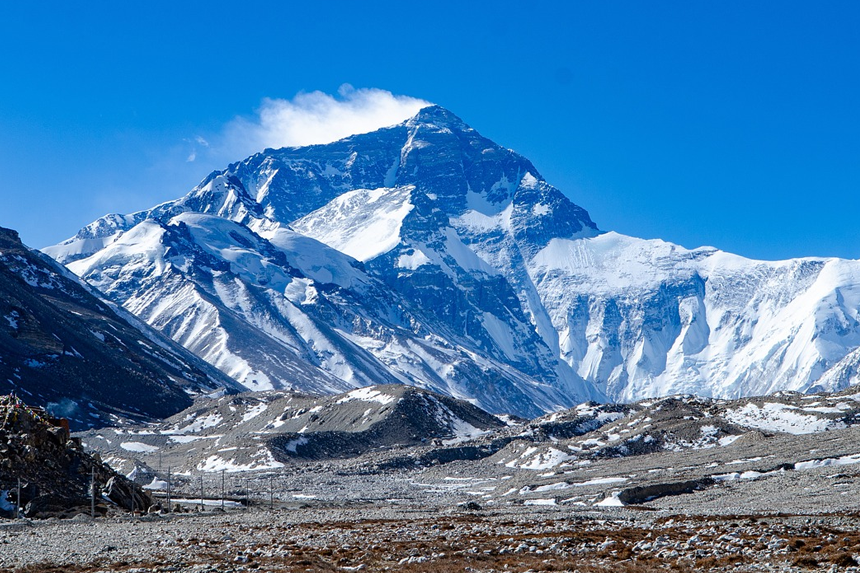
Nepal has announced a sharp increase in the Mount Everest permit fees, marking the first significant rise in nearly a decade. Starting in September, those aiming to summit the world’s tallest mountain during the peak climbing season will face a substantial fee hike.
- How Are Mount Everest Permit Fees Vital to Nepal's Economy?
- Why Do Concerns Over Overcrowding and Safety Still Persist?
- What is the Long-Awaited Fee Review and How Will Additional Revenue Be Used?
- Why Did Nepal’s Supreme Court Call for Limits on Mountaineering Permits?
- How Serious is Mount Everest’s Growing Garbage Problem?
- What Is the Economic Impact of Mountaineering on Nepal’s Economy?
The cost of a permit for climbers wishing to climb during the peak April to May period will rise to $15,000 (£12,180). This marks a 36% increase from the longstanding fee of $11,000, a figure that had remained unchanged for years. Additionally, fees for climbers during the off-peak months will also see an increase.
“Fees for those wanting to climb outside the peak April to May period will also see a 36% increase,” officials confirmed. This means it will cost $7,500 during the September to November window and $3,750 during the winter months from December to February.
How Are Mount Everest Permit Fees Vital to Nepal's Economy?
The significant rise in Mount Everest permit fees is an essential move for Nepal, where mountain climbing and trekking contribute more than 4% to the country’s economy. Climbing permits, including those for Mount Everest, play a crucial role in generating revenue for Nepal, which is home to eight of the world’s 14 highest mountains.
Income from permits is one of the country’s major sources of revenue, and the government’s move to adjust fees is seen as a response to the rising demand from climbers eager to scale Everest’s summit.
Why Do Concerns Over Overcrowding and Safety Still Persist?
Despite the increase in fees, concerns about overcrowding on Everest persist. Every year, approximately 300 permits are issued for the mountain. This high volume of climbers has led to frequent criticism of the government, with mountaineering experts questioning the sustainability of such numbers on the world’s highest peak.
“Experts have repeatedly criticized the government for issuing too many permits and creating dangerous conditions for climbers. Crowds at the summit often lead to long queues, resulting in unsafe situations, especially when climbers must wait in freezing temperatures,” said one mountaineering expert.
What is the Long-Awaited Fee Review and How Will Additional Revenue Be Used?
The director general of the Department of Tourism defended the fee increase, explaining that the royalty fees had not been reviewed for a long time. “The royalty (permit fees) had not been reviewed for a long time. We have updated them now,” he said.
While the government has announced the fee hike, it remains unclear how the additional revenue will be allocated. The government did not provide specific details on how the increased funds would be used, raising questions about the government’s plans for addressing the growing concerns related to overcrowding, safety, and mountain conservation.
Why Did Nepal’s Supreme Court Call for Limits on Mountaineering Permits?
In April 2024, Nepal’s Supreme Court issued a ruling that ordered the government to limit the number of mountaineering permits issued for Everest and other high peaks. The court emphasized that the capacity of the mountains must be respected to preserve both their natural beauty and the safety of those attempting to climb them.
However, the ruling did not establish a definitive cap on the number of permits, leaving the government to determine how best to address overcrowding.
How Serious is Mount Everest’s Growing Garbage Problem?
As concerns about overcrowding mount, so too does the growing issue of waste on the mountain. Everest has long been described as the “world’s highest garbage dump” due to the accumulation of trash left behind by climbers. In an attempt to address this, the Nepalese army launched an annual clean-up initiative in 2019, which has since recovered significant amounts of waste from the mountain.
Since then, at least five clean-up missions have been conducted, recovering 119 tonnes of rubbish, 14 human corpses, and some skeletons, according to reports from the army. Despite these efforts, it is estimated that more than 200 bodies remain on the mountain, a stark reminder of the dangers climbers face.
What Is the Economic Impact of Mountaineering on Nepal’s Economy?
Nepal’s mountainous terrain continues to be a major attraction for climbers and trekkers from all around the world. With eight of the world’s 14 highest peaks, including Everest, Nepal has become an essential destination for mountaineering enthusiasts. The revenue generated by permits and tourism associated with the mountains contributes a significant portion to the national economy, underscoring the importance of the climbing industry to the country’s economic well-being.
As Nepal adjusts its Mount Everest permit fees, the balance between economic benefits, environmental concerns, and safety challenges will remain a critical issue as the country navigates its growing mountaineering industry.