


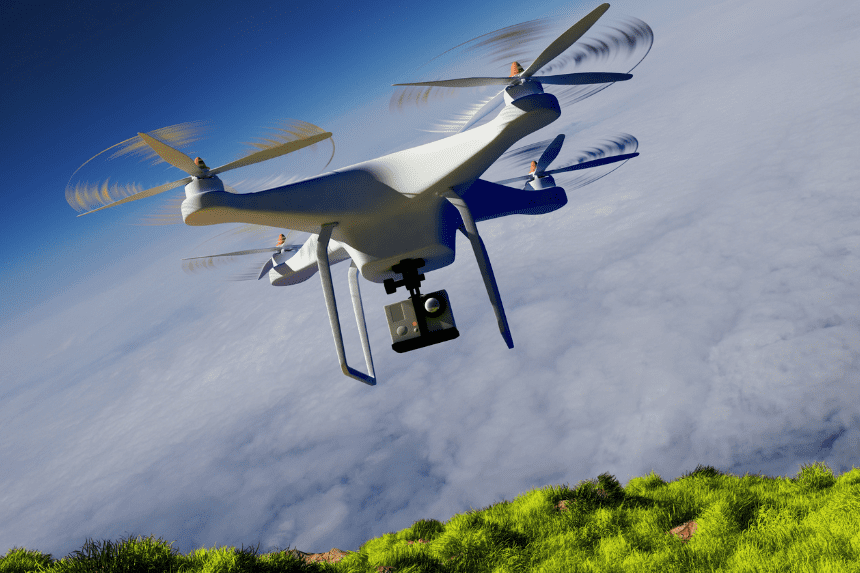
Following reports that several Russian drones had infiltrated Polish airspace, NATO has increased its military presence along the eastern border. Several NATO members immediately responded to the incident, which Polish officials called unusual. Alarms were raised throughout the alliance when three drones were shot down and others crashed throughout eastern Poland.
Poland responded by calling for an urgent meeting of the UN Security Council. In the meantime, nations including the Czech Republic, France, Germany, and the Netherlands have promised to increase their military presence. The alliance views the incident as one of the worst breaches of airspace since the conflict in Ukraine began.
What assistance has Poland gotten?
Wladyslaw Kosiniak-Kamysz, Poland’s defense minister, affirmed the broad backing of NATO allies. The Netherlands is sending 300 troops, artillery, and air defense equipment. The Czech Republic will provide 100 troops and helicopters. France is sending three Rafale fighter jets to strengthen airspace protection, and Germany has pledged to increase its air policing operation above Poland.
Further planes may be sent by the UK and France to patrol NATO’s eastern borders. With these moves, the area is moving from symbolic gestures to direct, strategic deployments. Here is the link to our article on the Russia Drone Attacks.
Was the drone invasion intentional?
It’s still unclear what the precise goal of the NATO drone invasion was. Poland and a number of European officials feel that Moscow purposefully provoked the action. The incident was characterized by President Karol Nawrocki as a “test” of NATO’s preparedness. Germany and France reiterated their position, warning of increased Russian aggressiveness.
General Alexus Grynkewich, NATO’s senior commander, stated that the alliance is still evaluating the situation. He pointed out that it’s too soon to say whether the breach was deliberate and that it’s still unknown how many drones were involved.
In what ways is NATO fortifying its eastern frontier?
The scope of security measures is growing quickly. Poland will limit the use of drones and small aircraft in the vicinity of its borders with Ukraine and Belarus. Additionally, Latvia has banned certain areas of its eastern airspace for a week. The goal of these actions is to stop additional unapproved air travel in delicate areas.
For further deterrence, Lithuania will host a German brigade, and Germany has pledged to “intensify its engagement” near the eastern border. NATO’s commitment to protecting its member states from airspace violations is demonstrated by its united position. Here is the link to our article on Drone Attack Escalation.
What part does Ukraine play?
Volodymyr Zelensky, the president of Ukraine, has offered NATO professional assistance in addressing drone concerns. Using lessons learned from Ukraine’s continuous experience with Russian aircraft attacks, he proposed cooperative air defense training. In order to prevent such provocations, he also advocated for the establishment of a single European air shield.
In addition to strengthening coordination between Ukraine and alliance members, this collaboration may improve NATO’s defense capabilities.
What threats exist in the region?
With the start of Russia and Belarus’ joint military exercise, Zapad 2025, tensions are predicted to increase even more. NATO nations view the exercise, which begins on Friday, as extremely provocative. Even while it will only include roughly 30,000 troops instead of the 200,000 in prior drills, it nevertheless raises serious concerns.
Poland will temporarily block its eastern border “for national security reasons” as a precaution. Russia, on the other hand, has denounced the action and warned that it may hurt free movement and trade.
Final Thoughts
An important turning point in Europe’s changing security environment is the NATO drone invasion over Poland. NATO takes territorial transgressions seriously, as seen by its prompt and well-coordinated response. Keeping a united front and making investments in cutting-edge air defense systems will be essential to ensuring regional peace and stability as tensions with Russia increase.